Course Content
- Course Introduction and Instructor
- Chi and Jin Fundamentals
- Inner Structure and the Six Harmonies
- Rooting and Tendon Connection
- Softness and Yin-Yang Transformation
- Whole-Body Breathing and Tan Tien
- Drawing the Bow and Fa Jin
- The Eight Gates
- Applying Principles through Push Hands
- Training and Certification
Course Description
This 1-day Tai Chi Master Class is taught by martial artist Andrew Jan and explores the internal principles that underlie Tai Chi Chi Kung II – Fajing Discharge Form, part of the Universal Healing Tao® System created by Grandmaster Mantak Chia. Rather than following one external sequence, the workshop examines how rooting, the Six Harmonies, Chi and Jin, tendon connection, and Yin-Yang transformation combine to generate and release trained internal power, known as Fa Jin. These principles are traced through the Lower Tan Tien, the Tai Chi Pole, and the Eight Gates, and are shown to apply across Yang, Wu, Chen, Sun, and other Tai Chi styles alike.
Course Introduction and Instructor
This Tai Chi Master Class is led by Andrew Jan, an Internal Martial Arts Senior Instructor within the Universal Healing Tao® System, rather than by Grandmaster Mantak Chia, who created the Tai Chi Chi Kung curriculum on which the workshop draws. Instead of concentrating on one external Tai Chi sequence, Andrew Jan examines the internal principles that make Tai Chi Chi Kung II – Discharging Form work as an internal martial art. The central question guiding the workshop is how the body becomes one connected structure that can receive force, transform it, and express power without relying primarily on isolated muscular strength. This perspective is explored specifically from within the Universal Healing Tao® Internal Martial Arts framework.
Chi and Jin Fundamentals
Two fundamental concepts anchor the workshop, Chi and Jin. Chi refers to life energy and the internal energetic processes cultivated through breathing, awareness, posture, and movement. Jin refers more specifically to trained internal force, developed once the body becomes structurally connected so force can travel through the feet, legs, pelvis, Lower Tan Tien, spine, shoulders, arms, and hands as one coordinated movement. Tai Chi training progressively transforms ordinary physical effort into this integrated whole-body power, teaching the practitioner not only to generate force but also to receive, store, redirect, and release it.
Inner Structure and the Six Harmonies
Correct structure is the foundation of internal power, and Andrew Jan examines the relationship between rooting, alignment, posture, and the traditional principle of the Six Harmonies, Liu He. The feet establish the connection with the ground, the legs and hips transmit force, the Lower Tan Tien organizes the center, the spine links the lower and upper body, and the hands express the movement of the whole structure. The external harmonies connect the shoulders and hips, the elbows and knees, and the hands and feet, while the internal harmonies relate intention, energy, and coordinated action. These principles connect Tai Chi directly to the structural training of Iron Shirt Chi Kung, which develops the root that Tai Chi then learns to maintain while moving.
Rooting and Tendon Connection
Rooting is fundamental to both Tai Chi Chi Kung I and the Fa Jin training of Tai Chi Chi Kung II, establishing a stable relationship with the earth while the body remains relaxed and capable of movement. Rather than becoming rigid, the practitioner aligns the skeleton, releases unnecessary muscular tension, and connects the movement of the upper body with the feet so incoming force can be transmitted through the structure instead of becoming trapped in an isolated joint. The principle of wrapping the tendons then develops spiral connections through the legs, torso, arms, and hands, binding the body into one continuous, elastic structure. This links Tai Chi practice directly with Iron Shirt II – Tendon Nei Kung.
Softness and Yin-Yang Transformation
Tai Chi movement often appears circular from the outside, yet internally these curved movements contain clear lines of force, a quality described as finding the straight within the curve. The curved movement keeps the body adaptive and relaxed while the internal line provides structural direction, so a movement can remain circular and fluid while still holding a precise internal alignment. Tai Chi is likewise built on continuous transformation between complementary qualities, as receiving changes into expressing, opening changes into closing, and fullness changes into emptiness. Within martial application, incoming force is not necessarily opposed directly but is first received and transformed before being returned.
Whole-Body Breathing and Tan Tien
Breathing is integrated with the movement of the entire body, and the practitioner develops awareness of expansion and contraction through the abdomen, back, waist, and pelvic floor rather than the chest alone. As internal connections develop, breath, posture, and movement increasingly begin to function together, supporting relaxation and connecting the Lower Tan Tien with the rest of the structure. The Lower Tan Tien is central to organizing internal power, initiating and coordinating action as the legs connect with the ground, the spine transfers the movement, and the arms and hands complete the expression. When the entire structure is connected through the Lower Tan Tien in this way, the whole body participates rather than the force remaining local to the extremities.
Drawing the Bow and Fa Jin
One image used to explain Fa Jin is drawing the bow, in which energy is first stored as the body stretches and connects like a bow before the tendons' elasticity and the Lower Tan Tien's organization allow the stored potential to be released. Fa Jin itself, the issuing or discharging of trained power, requires rooting, relaxation, alignment, elastic tendon connection, Lower Tan Tien power, Yi, timing, and whole-body coordination to occur together, rather than being created by tightening the arm or shoulder alone. Closing and releasing describes how different parts of the body organize toward the center so force can be gathered before the release occurs through the entire body, often making the visible final movement appear relatively small. The workshop also introduces the Tai Chi Pole, the body's central axis and Zhong Mai, which organizes the relationship between the crown, spine, Lower Tan Tien, pelvis, and ground during the discharge.
The Eight Gates
A central part of the workshop is the study of the Eight Gates, Ba Men, the fundamental energetic and martial methods of Tai Chi, commonly known as Peng, Lu, Ji, An, Lie, Cai, Zhou, and Kao. Each gate represents a particular way of organizing structure, direction, force, timing, and intention rather than a single external technique, from Peng's expansive structural support and Lu's yielding redirection to Ji's focused force and An's sinking and pressing power. Lie develops splitting force through spiral movement, Cai develops plucking power that relies on timing, Zhou expresses whole-body force through the elbow, and Kao develops close-range power through the shoulder or body structure. Together, the Eight Gates provide a framework for understanding how Tai Chi receives and expresses power throughout the body, not only through the hands.
Applying Principles through Push Hands
The external Tai Chi form provides a framework for developing these internal principles, and partner work reveals whether they are actually present by testing whether the practitioner is rooted, can receive pressure without unnecessary resistance, and can let force travel through the entire structure. This naturally leads toward Push Hands, Tui Shou, which develops sensitivity to another person's direction, balance, tension, and intention, allowing incoming pressure to be received, followed, redirected, and returned rather than met with force. Yi, focused awareness and intention, maintains the connection between the feet, Lower Tan Tien, spine, arms, and hands throughout this process, and within the Universal Healing Tao® approach also guides the movement of Chi. Because these internal questions of rooting, alignment, and power transmission apply independently of any one complete form, the workshop's material transfers across Yang, Wu, Chen, Sun, and other Tai Chi traditions, and provides focused supplementary training for the Fa Jin skills required in Tai Chi Chi Kung II – Discharging Form.
Training and Certification
The official Universal Healing Tao® Internal Martial Arts Education Path requires a minimum of 10 hours of workshop education for certification in Tai Chi Chi Kung II – Discharging Form, including a practical exam demonstrating the complete form clockwise and counterclockwise with Fa Jin, two practical applications evaluated in person, and an oral exam with a qualified UHT Inner Alchemy Senior Instructor. This 1-day Tai Chi Master Class runs approximately 4 hours and 35 minutes and provides concentrated training in the internal principles behind Tai Chi Chi Kung II, but it does not by itself constitute the complete 10-hour TC2 education or replace the required training and evaluation of the full Tai Chi Chi Kung 2 - Fa Jing Discharge Form. Andrew Jan, who leads the workshop, is an UHT Internal Martial Arts Senior Instructor and UHT Global Branch Leader for Internal Martial Arts within the Universal Healing Tao® System, certified in Tai Chi Chi Kung I through VI and co-author with Grandmaster Mantak Chia of works on Fa Jin and Wu Style Tai Chi and Push Hands. His teaching brings decades of martial arts practice to a curriculum whose Tai Chi Chi Kung forms were created by Mantak Chia within the Universal Healing Tao® System.
About the Instructor
Andrew Jan, who leads this workshop, is co-author with Mantak Chia, of the books: The Practice of Greater Kan and Li - Techniques for Creating the Immortal Self, 2014; Greatest Kan and Li - Gathering the Cosmic Light, 2014; Tai Chi Fa Jin - Advanced Techniques for Discharging Chi Energy, 2012; Tai Chi Wu Style - Advanced Techniques for Internalizing Chi Energy, 2013.
Important Notices
These teachings are provided for educational purposes only. They are not medical advice, diagnosis, or therapy. Please consult a qualified health professional regarding any health concerns before beginning or applying these practices.” Important education notice — through Andrew Jan Taoist Teachings Pty Ltd. These teachings are offered for educational and spiritual instruction and are not medical advice, diagnosis, or therapy. Traditional Taoist terms such as “healing,” “elixir,” “medicine,” or “pill” are used metaphorically and refer to inner cultivation rather than medical treatment. Descriptions of posture, breath, energy, or sensation reflect contemplative and cultural traditions, not health claims. These Taoist contemplative and breath-based practices may at times evoke emotional or psychological responses and are not suitable during pregnancy or during periods of significant emotional or psychological vulnerability. Participants with physical, medical, or psychological conditions, including significant trauma history or substance use, that may be affected by these practices, or those who feel unsure about their suitability, are recommended to seek appropriate professional guidance before participating. Teaching sessions may be recorded for educational purposes; no identifiable close-ups are intended, though voice or silhouette may appear incidentally. Content, livestreams, and recordings are not available to residents of the USA or Canada due to insurance restrictions. Participation is voluntary, and participants are responsible for their own wellbeing during and after the teachings and are encouraged to respect their limits and stop when needed.
---------
The content of this website is protected by copyright. You may download one copy of the information found on this website to a single computer for your personal, non-commercial, internal use.
Get this course
Course Videos
Tai Chi Master Class - Martial Artist Andrew Jan consists of 4 video files.
- 1. Day 1 Part 1 andrew-jan-tai-chi-master-class-unlock-the-fundamental-secrets-of-tai-chi 01:03:06
- 2. Day 1 Part 2 andrew-jan-tai-chi-master-class-unlock-the-fundamental-secrets-of-tai-chi 01:23:33
- 3. Day 1 Part 3 andrew-jan-tai-chi-master-class-unlock-the-fundamental-secrets-of-tai-chi 01:26:14
- 4. Day 1 Part 4 andrew-jan-tai-chi-master-class-unlock-the-fundamental-secrets-of-tai-chi 00:42:08
Free Bonus Material
Click to learn more about Master Chia.
-
 Mantak Chia Introduction (English)
01:57
-
 Mantak Chia Introduction (German)
02:01
-
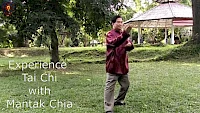 Experience Tai Chi with Mantak Chia
03:37
-
 Mantak Chia Morning Exercise
31:04
-
 Mantak Chia UHT System Overview: 9 Formulas
06:15
-
 Walter Kellenberger – How to become a UHT Qigong Level 1 Instructor
02:19
Mantak Chia Introduction (English)
Mantak Chia Introduction (German)
Experience Tai Chi with Mantak Chia
Mantak Chia Morning Exercise
Mantak Chia UHT System Overview: 9 Formulas
Walter Kellenberger – How to become a UHT Qigong Level 1 Instructor
Related Courses
Recommended Books

Bone Marrow Nei Kung

Knochenmark Nei Kung
Tao Yin - Exercises for Vitalisation, Health and Longevity

Tao Yin - Übungen für Vitalisierung, Gesundheit und Langlebigkeit
Nei Kung del Midollo Osseo
Tan Tien Qigong