Course Content
- Course Introduction and Instructor
- Eight Forces of Ba Gua Zhang
- Circle Walking and Centering
- Eight Directions and Eight Palms
- Animal Expressions
- Rooting, Spiraling, and Connection
- Yi, Awareness, and Moving Meditation
- Yin-Yang and the Five Elements
- Connection to Fusion Practice
- Martial Applications and Training Path
Course Description
Tai Chi Chi Kung IV – Ba Gua Zhang is an advanced practice within Healing Art 2 – Internal Martial Arts of the Universal Healing Tao® System. This course is taught by martial artist Andrew Jan, UHT Global Branch Leader for Internal Martial Arts, presenting a Ba Gua Zhang form developed within the system by Grandmaster Mantak Chia. The Eight Forces cultivated through Ba Gua (Pakua) Fusion meditation are translated into circular stepping, eight representative palms, animal expressions, and martial application. Students learn circle walking and centering, discovering how the meditative Ba Gua becomes movement, direction, and whole-body expression.
Course Introduction and Instructor
Tai Chi Chi Kung IV – Ba Gua Zhang, is an official certification discipline within Healing Art 2 – Internal Martial Arts of the Universal Healing Tao® System. This video course is led by martial artist Andrew Jan, who holds the titles UHT Global Branch Leader – Internal Martial Arts and Internal Martial Arts Senior Instructor and is certified in Tai Chi Chi Kung I through IV. The Ba Gua Zhang form itself was developed within the Universal Healing Tao® System by Grandmaster Mantak Chia, together with Dr. Andrew Jan, and is designed around eight representative palms, animal expressions, and martial applications with a close relationship to Fusion practice.
Eight Forces of Ba Gua Zhang
Ba Gua means Eight Trigrams, and in classical Chinese cosmology the Eight Trigrams represent fundamental patterns of change and transformation - the eight universal forces. Ba Gua Zhang translates these principles into the moving body through continual changes of direction rather than primarily linear movement, expressed through circular walking, turning, spiraling, and palm changes. The Eight Forces are experienced physically through direction, balance, structure, timing, intention, and whole-body movement, connecting Ba Gua Zhang closely with the internal structure cultivated in Fusion of the Five Elements.
Circle Walking and Centering
Circle walking, one of the defining characteristics of Ba Gua Zhang, has the practitioner move continuously around a central point while the feet stay connected with the ground, the knees and hips coordinate the stepping, and the pelvis and Lower Tan Tien organize the center. The spine remains upright and mobile while the arms and palms express the changing direction of the whole body, developing both spatial awareness and internal centering. As direction, stepping, and palms continually change, the internal center in the Lower Tan Tien remains stable, expressing the essential Ba Gua Zhang principle of remaining centered within continuous change.
Eight Directions and Eight Palms
The Ba Gua structure is organized through eight directional relationships, gradually developing the practitioner's ability to move, turn, receive, redirect, and express force in different directions rather than remaining oriented only forward and backward. The Universal Healing Tao® Ba Gua Zhang form contains eight representative palms, each expressing a particular directional and energetic quality through the coordinated feet, legs, waist, Lower Tan Tien, spine, shoulders, arms, hands, Yi, and direction. Together, the Eight Palms create a practical movement structure corresponding to the Eight Forces of Ba Gua.
Animal Expressions
The TC4 form incorporates animal expressions, using animal imagery to communicate qualities of movement that are difficult to convey through mechanical instruction alone, such as rooting, spiraling, expansion, coiling, agility, alertness, and sudden transformation. The purpose is not to imitate an animal externally but to let the image organize intention and whole-body movement from within. Within the form, the animal expressions are integrated with the representative palms and martial applications.
Rooting, Spiraling, and Connection
The rooting principles developed in Iron Shirt and earlier Tai Chi training become dynamic in Ba Gua Zhang, as the practitioner learns to remain grounded while continually stepping and turning, transferring and reorganizing the root with every step. Spiral movement through the feet, legs, hips, waist, spine, shoulders, arms, and palms connects the body into one continuous structure, so movement arises from the center rather than from the arms alone. This continuous turning and spiraling connects Ba Gua Zhang with the elastic whole-body connection developed in Iron Shirt II – Tendon Nei Kung. When the connection between hands, feet, waist, Lower Tan Tien, and root is maintained, force can travel through the entire structure, and incoming force can likewise be received and redirected.
Yi, Awareness, and Moving Meditation
Yi, focused intention, plays an essential role in Ba Gua Zhang, since attention must remain flexible without becoming scattered as direction changes continuously, tracking the center, the direction of travel, the feet, the body's orientation, the palms, and the surrounding space. The practice also develops the relationship between Xin, the heart-mind, and Yi, so that perception arises, intention organizes the response, and the body follows, with continued practice narrowing the interval between perception, intention, and action. Practiced as a form of moving meditation, Ba Gua Zhang requires continuous presence with every step, turn, and palm change, developing a quality of stillness within movement. This complex, multidirectional movement also reveals habitual patterns, such as one side feeling more stable or a turn creating unnecessary tension, which the practitioner learns to recognize and replace with more conscious responses.
Yin-Yang and the Five Elements
Ba Gua Zhang expresses the transformation of Yin and Yang through constant movement, as full changes into empty, opening changes into closing, advancing changes into turning, and softness and firmness continually return into one another, so the practitioner learns not to depend on any single position or direction. Within Taoist cosmology, the Eight Trigrams and the Five Elements represent related but different models of transformation, the Five Elements describing cyclical relationships and the Eight Trigrams describing directional and qualitative change. Within the Universal Healing Tao® system, both are explored through meditation and physical practice, and Ba Gua Zhang provides a way of experiencing them directly through stepping, turning, changing direction, and martial application.
Connection to Fusion Practice
A distinctive characteristic of the Universal Healing Tao® approach is the close relationship between Ba Gua Zhang and Fusion of the Five Elements, in which Fusion meditation develops an internal Ba Gua structure by gathering, differentiating, balancing, and integrating different energetic qualities. Ba Gua Zhang brings these related principles into movement, so the internal Ba Gua becomes dynamic, direction becomes stepping, energetic quality becomes posture, and inner transformation becomes physical action. The TC4 form therefore creates a bridge between Inner Alchemy and Internal Martial Arts, and with continued practice the individually distinguished palms, directions, animals, and movement qualities begin to merge into one underlying process of change.
Martial Applications and Training Path
Ba Gua Zhang has a strong martial foundation, in which circular stepping allows the practitioner to change angles rather than remain directly in front of incoming force, while turning, spiraling, and palm changes redirect pressure and alter the relationship between two bodies. The Eight Gates provide a further framework for directional movement and martial strategy, developing awareness of the complete surrounding field rather than only the space directly in front of the body. Within the Universal Healing Tao® education system, Tai Chi Chi Kung IV – Ba Gua Zhang, TC4, sits within a six-level curriculum from Tai Chi Chi Kung I – Yang Style through Tai Chi Chi Kung VI – Cane Stick Discharge Form. The current UHT Internal Martial Arts Education Path requires a minimum of 10 hours of workshop education for TC4 certification, including a practical demonstration of the complete Circle Form clockwise and counterclockwise, knowledge of the eight gates, animals, and palms, and an additional oral examination with a qualified UHT Inner Alchemy Senior Instructor holding the TC4 qualification. Completion of the video course alone does not constitute certification, which requires the recognized training hours together with this practical and oral evaluation, leading to certification as UHT Tai Chi Chi Kung IV – Ba Gua Zhang, TC4, within Healing Art 2 – Internal Martial Arts.
About the Instructor
Andrew Jan, who leads this workshop, is co-author with Mantak Chia, of the books: The Practice of Greater Kan and Li - Techniques for Creating the Immortal Self, 2014; Greatest Kan and Li - Gathering the Cosmic Light, 2014; Tai Chi Fa Jin - Advanced Techniques for Discharging Chi Energy, 2012; Tai Chi Wu Style - Advanced Techniques for Internalizing Chi Energy, 2013.
Important Notices
These teachings are provided for educational purposes only. They are not medical advice, diagnosis, or therapy. Please consult a qualified health professional regarding any health concerns before beginning or applying these practices.” Important education notice — through Andrew Jan Taoist Teachings Pty Ltd. These teachings are offered for educational and spiritual instruction and are not medical advice, diagnosis, or therapy. Traditional Taoist terms such as “healing,” “elixir,” “medicine,” or “pill” are used metaphorically and refer to inner cultivation rather than medical treatment. Descriptions of posture, breath, energy, or sensation reflect contemplative and cultural traditions, not health claims. These Taoist contemplative and breath-based practices may at times evoke emotional or psychological responses and are not suitable during pregnancy or during periods of significant emotional or psychological vulnerability. Participants with physical, medical, or psychological conditions, including significant trauma history or substance use, that may be affected by these practices, or those who feel unsure about their suitability, are recommended to seek appropriate professional guidance before participating. Teaching sessions may be recorded for educational purposes; no identifiable close-ups are intended, though voice or silhouette may appear incidentally. Content, livestreams, and recordings are not available to residents of the USA or Canada due to insurance restrictions. Participation is voluntary, and participants are responsible for their own wellbeing during and after the teachings and are encouraged to respect their limits and stop when needed.
---------
The content of this website is protected by copyright. You may download one copy of the information found on this website to a single computer for your personal, non-commercial, internal use.
Get this course
Course Videos
Mantak Chia's BA GUA ZHANG Tai Chi 4 Form, Dynamic Fusion in Shamanistic Tradition - Martial Artist Andrew Jan consists of 8 video files.
- 1. Day 1 Part 1 andrew-jan-mantak-chias-ba-gua-zhang-tai-chi-4-form-fusion-in-movement 01:15:17
- 2. Day 1 Part 2 andrew-jan-mantak-chias-ba-gua-zhang-tai-chi-4-form-fusion-in-movement 01:22:46
- 3. Day 1 Part 3 andrew-jan-mantak-chias-ba-gua-zhang-tai-chi-4-form-fusion-in-movement 00:43:32
- 4. Day 1 Part 4 andrew-jan-mantak-chias-ba-gua-zhang-tai-chi-4-form-fusion-in-movement 01:05:09
- 5. Day 2 Part 1 andrew-jan-mantak-chias-ba-gua-zhang-tai-chi-4-form-fusion-in-movement 01:00:44
- 6. Day 2 Part 2 andrew-jan-mantak-chias-ba-gua-zhang-tai-chi-4-form-fusion-in-movement 01:02:10
- 7. Day 2 Part 3 andrew-jan-mantak-chias-ba-gua-zhang-tai-chi-4-form-fusion-in-movement 00:57:36
- 8. Day 2 Part 4 andrew-jan-mantak-chias-ba-gua-zhang-tai-chi-4-form-fusion-in-movement 00:24:54
Free Bonus Material
Click to learn more about Master Chia.
-
 Mantak Chia Introduction (English)
01:57
-
 Mantak Chia Introduction (German)
02:01
-
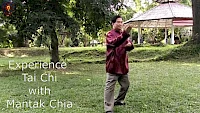 Experience Tai Chi with Mantak Chia
03:37
-
 Mantak Chia Morning Exercise
31:04
-
 Mantak Chia UHT System Overview: 9 Formulas
06:15
-
 Walter Kellenberger – How to become a UHT Qigong Level 1 Instructor
02:19
Mantak Chia Introduction (English)
Mantak Chia Introduction (German)
Experience Tai Chi with Mantak Chia
Mantak Chia Morning Exercise
Mantak Chia UHT System Overview: 9 Formulas
Walter Kellenberger – How to become a UHT Qigong Level 1 Instructor
Related Courses
Recommended Books

Bone Marrow Nei Kung

Knochenmark Nei Kung
Tao Yin - Exercises for Vitalisation, Health and Longevity

Tao Yin - Übungen für Vitalisierung, Gesundheit und Langlebigkeit
Nei Kung del Midollo Osseo
Tan Tien Qigong