Course Content
- Course Introduction and Instructor
- Foundations from Tai Chi I
- Becoming One with the Cane
- Rooting and Whole-Body Structure
- Lower Tan Tien Movement and Yi
- Hook and Shaft Applications
- Silk-Reeling and Spiraling Energy
- Slow Practice and Coordination
- Connections Within the UHT System
- Training and Certification
Course Description
Tai Chi Chi Kung V – Cane Stick Slow Form, is a specialized Internal Martial Arts practice within the Universal Healing Tao® System, developed by Grandmaster Mantak Chia together with Andrew Jan, who teaches this video course. Building on the footwork and body mechanics of Tai Chi Chi Kung I – Yang Style, the form introduces a traditional walking cane as an extension of the body's internal structure. Students learn to unite rooting, Lower Tan Tien movement, spiraling, and focused awareness with the cane's hook, shaft, and tip, discovering both its martial applications and its structural and energetic foundation for the later discharge form.
Course Introduction
Tai Chi Chi Kung V – Cane Stick Slow Form, is a specialized Internal Martial Arts practice within the Universal Healing Tao® System, developed by Grandmaster Mantak Chia together with Andrew Jan, UHT Global Branch Leader for Internal Martial Arts and Internal Martial Arts Senior Instructor, teaches the video course and participated with Grandmaster Mantak Chia in introducing and defining the newer UHT Tai Chi forms, including both Cane Stick forms (Tai Chi V and VI). The course combines the fundamental principles of Tai Chi Chi Kung with the use of a traditional walking cane, extending the practitioner's structure beyond the hands and requiring the integration of intention, balance, timing, and whole-body movement through an external object.
Foundations from Tai Chi I - Yang Style Form
Tai Chi Chi Kung V's footwork and basic body mechanics are closely related to Tai Chi Chi Kung I – Yang Style, allowing practitioners already familiar with Tai Chi I to transfer their established patterns of stepping, turning, rooting, and Lower Tan Tien movement into a weapon form without learning an entirely new system of waist and legwork. The form builds on rooting, Lower Tan Tien movement, whole-body connection, spiraling, weight transfer, Yi, relaxation, and coordination between upper and lower body already developed in Tai Chi I. Because the footwork is shared, practitioners can concentrate more quickly on the additional demands created by the cane, which becomes an extension of the body's internal structure.
Becoming One with the Cane
A central idea of the form is to become one with the cane. At the beginning, the practitioner may experience the cane as a separate object held in the hands, but with continued practice this distinction gradually decreases. Movement begins in the feet and Lower Tan Tien, travels through the waist and spine, and is transmitted by the shoulders and arms before the cane completes the movement. When the structure is integrated, the cane no longer moves independently from the body but becomes the final extension of whole-body action.
Rooting and Whole-Body Structure
The principles of Iron Shirt Chi Kung provide an important foundation for the Cane Stick Slow Form. The feet establish contact with the earth, the legs create a stable base, the pelvis and Lower Tan Tien organize the center, the spine connects the lower and upper body, and the shoulders remain relaxed as the arms and hands transmit movement into the cane. Correct structure allows the practitioner to use the entire body rather than relying primarily on arm strength, making the cane another method for testing and refining whole-body connection.
Lower Tan Tien Movement and Yi
As in the other Universal Healing Tao® Tai Chi forms, the Lower Tan Tien functions as the organizing center, so turns, circles, strikes, hooks, and changes of direction are coordinated from the center rather than moved only with the wrists or arms — the Lower Tan Tien turns, the waist responds, the spine transmits, the arms follow, and the cane expresses the movement. The cane also extends both physical structure and focused awareness; where Yi may be directed through the hand or fingers in empty-hand Tai Chi, it must now continue beyond the hand toward the tip, shaft, or hook. This develops a larger field of spatial perception and requires clearer coordination between intention and physical structure, so the cane is no longer experienced as something merely carried but becomes part of the movement intention.
Hook and Shaft Applications
The curved handle of the walking cane provides distinctive martial possibilities — within the TC5 form, the hook may be used for pulling, trapping, controlling, and grappling, applications that require sensitivity rather than brute force and that connect the hook action with footwork, waist movement, the Lower Tan Tien, and whole-body structure. The shaft provides another range of applications, including blocking, striking, deflecting, and thrusting, with power arising from the ground and center while the hands guide, rather than drive, the cane. This distinguishes internal cane practice from simple arm-driven stick techniques, and because the applications are not separate from the form, understanding them deepens understanding of the movements themselves.
Silk-Reeling and Spiraling Energy
The Cane Stick Slow Form incorporates the principle often described as silk-reeling energy, in which the feet, legs, waist, spine, shoulders, arms, wrists, and cane participate in one connected, continuous rotation rather than isolated linear actions — too abrupt a movement breaks the thread, while too loose a movement loses the connection. Spiral movement is especially important when working with the cane, since its length makes changes of angle and direction more visible and small movements at the center can create larger movements at the tip. Rather than forcing the cane through space, the practitioner learns to turn the body and let the cane follow the internal spiral.
Slow Practice and Coordination
Practiced slowly, TC5 makes structural errors, unnecessary tension, and poor balance easier to observe, giving the practitioner time to examine the feet, knees, pelvis, Lower Tan Tien, spine, shoulders, arms, and their relationship to the cane. Coordination unites the feet, legs, waist, Lower Tan Tien, spine, arms, hands, and cane within one continuous action, so that the cane provides immediate feedback and errors in timing or alignment become visible through its movement. The concealing principle trains the practitioner to shift direction without revealing intention through unnecessary preparation or visible tension, while movement through multiple directions extends the eight-directional awareness already present in other advanced UHT Internal Martial Arts farther along the length of the cane. Although primarily a slow form, TC5 also includes jumping and other dynamic movement that tests the practitioner's ability to regain structural and energetic connection the instant the stable base changes, while strength develops through structure rather than excessive muscular contraction even as the wrists, shoulders, spine, and hips remain mobile enough for continuous movement.
Connections Within the UHT System
The Tai Chi Chi Kung V - Slow Cane Stick Form also incorporates foundational principles associated with Fa Jin, teaching where force originates and how it travels through the connected body, even though the Slow Form itself emphasizes structure, preparation, and control rather than explicit discharge; the later Tai Chi Chi Kung VI – Cane Stick Fa Jing Discharge Form develops these same principles into full discharge power, so Tai Chi Chi Kung V provides its structural and energetic foundation. The course material also relates the form to the Microcosmic Orbit, the foundational Universal Healing Tao® practice of energetic circulation through the Governor and Conception Vessels, carrying that meditative awareness into stepping, turning, and cane movement. Movement names within the sequence carry imagery from the language of Taoist Inner Alchemy and Immortality practices, giving the form a contemplative dimension connected to transformation, balance, cultivation, and refinement, and the Slow Cane Form can itself be practiced as a form of moving meditation that reveals habitual patterns of tension and imbalance. Within the Universal Healing Tao® approach, the interaction of Yin and Yang traditionally described as Taiji is explored through body, awareness, and internal cultivation together, with the cane adding a further dimension to this integration. Many of the underlying principles — distance, angle, whole-body connection, spiraling, timing, and spatial awareness — also transfer to similar dayly used objects such as an umbrella or a straight walking stick.
Training and Certification
Within Healing Art 2 – Internal Martial Arts, Tai Chi Chi Kung V follows Tai Chi Chi Kung I – Yang Style, II – Discharging Form, III – Wu Style, and IV – Ba Gua Zhang, and is officially designated Tai Chi Chi Kung V – Cane Stick Slow Form, Tai Chi V. The published UHT Internal Martial Arts Education Path requires a minimum of 10 hours of workshop education in Tai Chi V, taught by Grandmaster Mantak Chia, an updated UHT Inner Alchemy Senior Instructor, or a UHT Certified Instructor holding the Tai Chi V certification. The practical evaluation requires the candidate to demonstrate the complete form clockwise and counterclockwise and to perform two practical applications, which by UHT examination rules must be assessed in person, along with an additional oral examination held with an updated UHT Inner Alchemy Senior Instructor Level 1 or Level 2 holding the TC5 qualification. The currently available video course with Andrew Jan runs approximately 7 hours and 26 minutes and provides extensive training in the form and its internal principles, but since the official education path requires a minimum of 10 recognized workshop hours, completion of this video course alone does not automatically fulfill the full Tai Chi V certification requirement.
About the Instructor
Andrew Jan, who leads this workshop, is co-author with Mantak Chia, of the books: The Practice of Greater Kan and Li - Techniques for Creating the Immortal Self, 2014; Greatest Kan and Li - Gathering the Cosmic Light, 2014; Tai Chi Fa Jin - Advanced Techniques for Discharging Chi Energy, 2012; Tai Chi Wu Style - Advanced Techniques for Internalizing Chi Energy, 2013.
Important Notices
Please read the Terms and Conditions under the “Read More” tab before purchasing this course.
“Note: These teachings are provided for educational purposes only. They are not medical advice, diagnosis, or therapy. Please consult a qualified health professional regarding any health concerns before beginning or applying these practices.” Important education notice — through Andrew Jan Taoist Teachings Pty Ltd. These teachings are offered for educational and spiritual instruction and are not medical advice, diagnosis, or therapy. Traditional Taoist terms such as “healing,” “elixir,” “medicine,” or “pill” are used metaphorically and refer to inner cultivation rather than medical treatment. Descriptions of posture, breath, energy, or sensation reflect contemplative and cultural traditions, not health claims. These Taoist contemplative and breath-based practices may at times evoke emotional or psychological responses and are not suitable during pregnancy or during periods of significant emotional or psychological vulnerability. Participants with physical, medical, or psychological conditions, including significant trauma history or substance use, that may be affected by these practices, or those who feel unsure about their suitability, are recommended to seek appropriate professional guidance before participating. Teaching sessions may be recorded for educational purposes; no identifiable close-ups are intended, though voice or silhouette may appear incidentally. Content, livestreams, and recordings are not available to residents of the USA or Canada due to insurance restrictions. Participation is voluntary, and participants are responsible for their own wellbeing during and after the teachings and are encouraged to respect their limits and stop when needed.
---------
The content of this website is protected by copyright. You may download one copy of the information found on this website to a single computer for your personal, non-commercial, internal use.
Get this course
Course Videos
Mantak Chia's Tai Chi 5 - Slow Cane Form - Martial Artist Andrew Jan consists of 6 video files.
- 1. Day 1 Part 1 andrew-jan-tai-chi-5-slow-cane-form-by-andrew-jan 01:44:39
- 2. Day 1 Part 2 andrew-jan-tai-chi-5-slow-cane-form-by-andrew-jan 01:30:37
- 3. Day 1 Part 3 andrew-jan-tai-chi-5-slow-cane-form-by-andrew-jan 00:47:13
- 4. Day 2 Part 1 andrew-jan-tai-chi-5-slow-cane-form-by-andrew-jan 01:05:30
- 5. Day 2 Part 2 andrew-jan-tai-chi-5-slow-cane-form-by-andrew-jan 02:05:47
- 6. Day 2 Part 3 andrew-jan-tai-chi-5-slow-cane-form-by-andrew-jan 00:12:22
Free Bonus Material
Click to learn more about Master Chia.
-
 Mantak Chia Introduction (English)
01:57
-
 Mantak Chia Introduction (German)
02:01
-
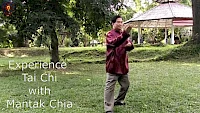 Experience Tai Chi with Mantak Chia
03:37
-
 Mantak Chia Morning Exercise
31:04
-
 Mantak Chia UHT System Overview: 9 Formulas
06:15
-
 Walter Kellenberger – How to become a UHT Qigong Level 1 Instructor
02:19
Mantak Chia Introduction (English)
Mantak Chia Introduction (German)
Experience Tai Chi with Mantak Chia
Mantak Chia Morning Exercise
Mantak Chia UHT System Overview: 9 Formulas
Walter Kellenberger – How to become a UHT Qigong Level 1 Instructor
Related Courses
Recommended Books

Bone Marrow Nei Kung

Knochenmark Nei Kung
Tao Yin - Exercises for Vitalisation, Health and Longevity

Tao Yin - Übungen für Vitalisierung, Gesundheit und Langlebigkeit
Nei Kung del Midollo Osseo
Tan Tien Qigong