Kursinhalt
- Foundations of Tai Chi Chi Kung
- Moving Meditation
- The 13-Movement Yang Style Form
- Yi and Inner Structure
- Rooting and Spiraling
- The Lower Tan Tien
- Breath, Joints, and Whole-Body Connection
- Heaven, Earth, and Yin-Yang Dynamics
- Martial Arts Application and Iron Shirt Foundation
- Training and Certification
Kursbeschreibung
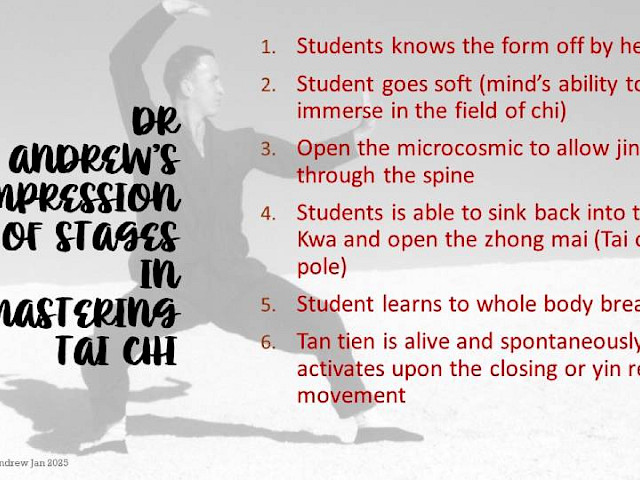
Tai Chi Chi Kung I – Yang Style introduces the foundational practice of Healing Art 2 – Internal Martial Arts within the Universal Healing Tao® System, developed by Grandmaster Mantak Chia. This compact Yang-style sequence of 13 postures, practiced clockwise and counterclockwise, serves as a moving meditation that unites breathing, awareness, rooting, structural alignment, and the cultivation of Chi. Students learn to move beyond memorizing choreography toward the inner structure of Tai Chi, developing whole-body connection, spiraling, and the integration of Universal, Cosmic, and Earth Force. Building on the foundation of Iron Shirt Chi Kung, this course prepares practitioners for certification within the Universal Healing Tao®'s Internal Martial Arts path.
Foundations of Tai Chi Chi Kung
Tai Chi Chi Kung I – Yang Style is a foundational practice within Healing Art 2 – Internal Martial Arts of the Universal Healing Tao® System developed by Grandmaster Mantak Chia. This compact Yang-style form consists of 13 postures and movements practiced clockwise and counterclockwise, and its relatively short external sequence allows training to move beyond memorizing movements toward what the Universal Healing Tao® describes as the inner structure of Tai Chi. The practice combines movement, breathing, awareness, rooting, structural alignment, and the conscious cultivation of Chi, with the aim of developing whole-body connection rather than simply reproducing a sequence of positions. Within the UHT education path, Tai Chi Chi Kung comprises six levels, from this Yang Style form through the Discharging Form, Wu Style, Ba Gua Zhang, and two Cane Stick forms, and TC1 establishes the fundamental movement principles on which these later levels build.
Moving Meditation
Tai Chi Chi Kung can be understood as meditation in movement, in which the body remains in continuous motion while the mind becomes increasingly calm and focused. Breathing, posture, balance, and awareness are brought together within a single process, integrating stillness of mind with movement of the body rather than separating the two. The practitioner learns to remain internally centered while the body changes direction, transfers weight, opens, closes, rises, sinks, expands, and contracts. This combination of movement and stillness forms one of the essential principles of the practice.
The 13-Movement Yang Style Form
Grandmaster Mantak Chia teaches a concise early Yang-style Tai Chi form of 13 postures and movements, containing the fundamental principles traditionally associated with the eight energetic expressions and five directions of Tai Chi. Because the external sequence is comparatively short, it can be learned more quickly than many long traditional Tai Chi forms, though learning the visible choreography represents only the beginning. At first, attention is naturally directed toward the sequence itself, such as which foot moves and where the hands go, but as the choreography becomes familiar, attention progressively moves inward toward the feet, joints, tendons, spine, breathing, and Lower Tan Tien. The same external form therefore develops through different levels of understanding, with the movements themselves staying the same while the internal organization becomes more refined, allowing the practice to continue developing over many years.
Yi and Inner Structure
A central element of Tai Chi Chi Kung is Yi, or focused intention, which organizes the movement of the body and guides the movement of Chi rather than allowing movement to be performed mechanically. Attention accompanies the shifting of weight, the turning of the waist, and the opening and closing of the joints, so that repeated practice gradually strengthens the connection between intention, breathing, structure, and movement. The Universal Healing Tao® places particular emphasis on the inner structure underlying this visible form, in which the feet establish contact with the Earth, the legs transmit force through the knees and hips, the pelvis and Lower Tan Tien organize the center, and the spine connects the lower and upper body. When these elements are coordinated, the body begins to move as one integrated unit, and power is produced not by isolated muscular contraction but through alignment, rooting, spiraling, relaxation, timing, and connection. This principle links Tai Chi Chi Kung directly with the structural training of Iron Shirt Chi Kung.
Rooting and Spiraling
Rooting is one of the fundamental skills of Tai Chi Chi Kung, in which the practitioner learns to establish a stable relationship with the ground while remaining flexible enough to move freely, transferring weight through the feet and legs without losing connection with the Lower Tan Tien. In the Universal Healing Tao® system, rooting also has an energetic dimension, developing awareness of the Earth Force while maintaining an upward connection through the spine and crown toward Heaven. Tai Chi movement rarely follows straight mechanical lines, and the joints, limbs, waist, and spine instead participate in subtle spiraling that connects different parts of the body and allows force to travel through the structure with less interruption. Spiraling also helps maintain openness in the joints and continuity through the tendons and connective tissues, complementing the structural training developed through Iron Shirt Chi Kung and Tendon Nei Kung, so that the practitioner learns to experience movement as one continuous chain rather than a sequence of separate parts.
The Lower Tan Tien
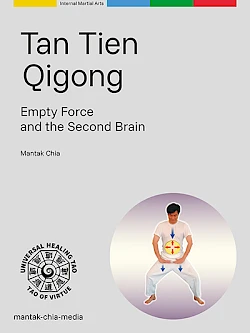
The Lower Tan Tien functions as the energetic and structural center of Tai Chi Chi Kung, with movements increasingly initiated and coordinated from this center rather than from the arms and shoulders. As the body turns the Tan Tien turns, as weight shifts awareness remains centered in the Tan Tien, and as the arms move they stay connected with the center, transforming Tai Chi from a sequence of external gestures into coordinated whole-body movement. The relationship between Tai Chi Chi Kung and Tan Tien Qigong is therefore particularly close, since Tan Tien Qigong develops the ability to gather and store Chi in the center. Tai Chi Chi Kung, in turn, develops the ability to maintain this center while the body is moving.
Breath, Joints, and Whole-Body Connection
Breathing in Tai Chi becomes progressively integrated with movement, remaining natural and free rather than forced into every individual action, so that expansion and contraction, opening and closing, and rising and sinking increasingly harmonize with the breathing cycle. Tai Chi Chi Kung also encourages the ankles, knees, hips, spine, shoulders, elbows, wrists, and hands to remain open and relaxed together, since unnecessary muscular tension can interrupt this connection and relaxation does not mean weakness. One of the central objectives of the practice is to move with the whole body connected, so that a movement of the hand begins much deeper, relating to the feet, legs, hips, Tan Tien, spine, and shoulders before reaching the arm and hand. The same principle applies when receiving external force, as the body learns to distribute pressure through the entire structure toward the ground rather than allowing it to become trapped in one joint or muscle group. This whole-body integration, supported by open joints and integrated breathing, is one of the principal differences between merely reproducing Tai Chi movements and developing their internal qualities.
Heaven, Earth, and Yin-Yang Dynamics
The Universal Healing Tao® interprets Tai Chi as a practice through which the body becomes increasingly sensitive to the forces of Heaven, Earth, and the surrounding cosmos, which Mantak Chia describes as Universal Force, Cosmic Force, and Earth Force. Rooting establishes the relationship with the Earth, the upright spine and crown maintain the connection with Heaven, and the moving body integrates these influences within the Lower Tan Tien, progressively learning to absorb, transform, circulate, and integrate these forces through the Tai Chi form. Tai Chi also continuously alternates between complementary qualities, such as full and empty, opening and closing, rising and sinking, advancing and retreating, firmness and softness, and movement and stillness, embodying the dynamic interaction of Yin and Yang. Balance in this context does not mean remaining static between two opposites but the continuous ability to adapt as one quality changes into another. Tai Chi thereby provides a direct physical experience of one of the fundamental principles of Taoist philosophy.
Martial Arts Application and Iron Shirt Foundation
Tai Chi has historical roots as an internal martial art, and the movements of the form contain practical applications involving receiving, redirecting, neutralizing, and expressing force. Within the UHT training path, martial application is not separated from internal cultivation, since the application tests whether rooting, alignment, timing, relaxation, and whole-body connection are actually present within the movement, and the current UHT certification process for Tai Chi Chi Kung I therefore includes practical testing of two applications in addition to demonstration of the complete form. Iron Shirt I provides an important foundation for this training, developing rooting, structural alignment, open joints, whole-body connection, and internal stability, which Tai Chi Chi Kung then applies while the body is moving. For this reason, the current Universal Healing Tao® education path requires Iron Shirt I – Rooting certification before certification in Tai Chi Chi Kung I. The two practices complement each other, as Iron Shirt develops the structure while Tai Chi learns to move it.
Training and Certification
According to the UHT Internal Martial Arts Education Path 2026, certification in Tai Chi Chi Kung I – Yang Style requires a minimum of 10 hours of workshop education, received from Grandmaster Mantak Chia, an updated UHT Inner Alchemy Senior Instructor, or an updated UHT Certified Instructor holding the Tai Chi Chi Kung I qualification. Candidates must already hold an updated UHT Inner Alchemy Certified Instructor certification and the UHT Iron Shirt I – Rooting certification before beginning this training. The official 2-day workshop with Grandmaster Mantak Chia contains approximately 12 hours of video instruction, is listed with 10 certification hours, and includes the 13-movement Yang-style form, practical exercises, theory, and morning Qigong. For the practical certification examination, which must be conducted in person, the candidate must demonstrate the complete 13-posture form in both clockwise and counterclockwise directions and successfully perform two practical applications, followed by an oral examination with an updated UHT Inner Alchemy Senior Instructor Level 1 or 2 holding the Tai Chi Chi Kung I qualification. After successful completion of the required training and examinations, the qualification is recorded as UHT Tai Chi Chi Kung I – Yang Style, TC1, within Healing Art 2 – Internal Martial Arts.
---------
The content of this website is protected by copyright. You may download one copy of the information found on this website to a single computer for your personal, non-commercial, internal use.
Diesen Kurs kaufen
Nach dem abgeschlossen Kauf eines Videokurses erhalten Sie von uns eine E-Mail mit einem Download-Link. Über diesen Link können Sie den Video-Workshop einfach herunterladen.
Kursvideos sind in der Regel in einzelne Teilvideos unterteilt um einen reibungslosen Download zu gewährleisten. Eine Liste der einzelnen Kursbestandteile finden Sie nachfolgend auf dieser Seite (Rubrik Kursvideos).
Bitte beachten Sie, dass alle Inhalte urheberrechtlich geschützt sind. Sie dürfen ausschließlich eine Kopie auf einen einzelnen Computer für Ihren persönlichen, nicht kommerziellen, Gebrauch herunterladen.
Kursvideos
Tai Chi Chi Kung 1 Yang Style besteht aus 2 Videodateien.
- 1. Day 1 Part 1 tai-chi-chi-kung-1-yang-style 05:05:38
- 2. Day 2 Part 1 tai-chi-chi-kung-1-yang-style 04:56:33
Kostenloses Bonusmaterial
Klicken Sie, um mehr über Meister Chia zu erfahren.
-
 Mantak Chia Einführung (Englisch)
01:57
-
 Mantak Chia Einführung (Deutsch)
02:01
-
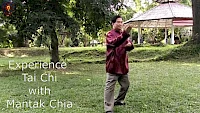 Tai Chi erleben mit Mantak Chia
03:37
-
 Morgenübungen mit Mantak Chia
31:04
-
 Mantak Chia UHT-Systemüberblick: 9 Formeln
06:15
-
 Walter Kellenberger – So werden Sie UHT-Qigong-Lehrer Level 1
02:19
Mantak Chia Einführung (Englisch)
Mantak Chia Einführung (Deutsch)
Tai Chi erleben mit Mantak Chia
Morgenübungen mit Mantak Chia
Mantak Chia UHT-Systemüberblick: 9 Formeln
Walter Kellenberger – So werden Sie UHT-Qigong-Lehrer Level 1
Verwandte Kurse
Empfohlene Bücher

Bone Marrow Nei Kung

Knochenmark Nei Kung
Tao Yin - Exercises for Vitalisation, Health and Longevity

Tao Yin - Übungen für Vitalisierung, Gesundheit und Langlebigkeit
Nei Kung del Midollo Osseo
Tan Tien Qigong