Kursinhalt
- Foundations of Tan Tien Qigong
- The Three Tan Tiens
- Internal Chi Pressure
- The Abdominal Brain
- Tiger and Dragon Breath
- The Eleven Animal Postures
- The Perineum and the Lower Center
- The Cauldron of Inner Alchemy
- Rooting and Centering
- Training and Certification
Kursbeschreibung
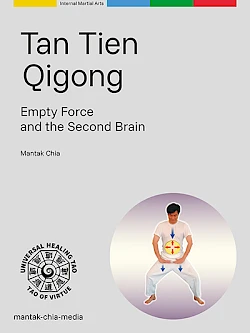
Tan Tien Qigong is a foundational practice of Taoist energy cultivation within the Universal Healing Tao® System developed by Grandmaster Mantak Chia. Students learn to develop awareness of the Lower Tan Tien and to gather, condense, store, and stabilize Chi in the center of the body, rather than letting it stay concentrated in the head or scattered throughout the body. Through breathing, posture, movement, internal pressure, and characteristic exercises such as the Tiger and Dragon Breath and the eleven animal postures, the course builds the energetic and structural foundation for later Universal Healing Tao® practices, including Tai Chi Chi Kung, Iron Shirt Chi Kung, and advanced Inner Alchemy.
Foundations of Tan Tien Qigong
Tan Tien Qigong is a central practice of Taoist energy cultivation within the Universal Healing Tao® System developed by Grandmaster Mantak Chia. Its primary purpose is to develop awareness of the Lower Tan Tien and to cultivate the ability to gather, condense, store, and stabilize Chi in the center of the body. Mantak Chia describes the Lower Tan Tien as the body's principal energy reservoir, or bio-battery, emphasizing that energy must not only be generated but also gathered and stored. Without a stable center, Chi may remain scattered through the muscles, organs, emotions, or mental activity, so Tan Tien Qigong develops the ability to return surplus energy to the abdominal center and maintain a stronger internal reserve.
The Three Tan Tiens
The Lower Tan Tien is traditionally located in the lower abdomen, below the navel and toward the center of the body, and is experienced as a three-dimensional internal space rather than a surface point. The Chinese term Dantian is commonly translated as Elixir Field or Cinnabar Field, reflecting its traditional association with the gathering, transformation, and refinement of vital energy. Taoist internal cultivation distinguishes three principal energetic fields — the Upper Tan Tien within the head, associated with consciousness and spiritual awareness; the Middle Tan Tien within the chest, associated with the heart and emotional refinement; and the Lower Tan Tien within the lower abdomen, associated with vitality, grounding, and the storage of Chi. In foundational Taoist practice, attention is first established in the Lower Tan Tien before progressively working with the higher energetic centers, since it provides the foundation for later practices such as Tai Chi Chi Kung, Iron Shirt Chi Kung, meditation, Healing Love, and the more advanced stages of Inner Alchemy.
Internal Chi Pressure
One of the characteristic principles of Tan Tien Qigong is the development of internal Chi pressure, gradually created within the abdominal cavity through specific breathing methods and postures. This internal pressure supports the energetic relationship between the Lower Tan Tien, the internal organs, the fascia, the pelvic floor, and the surrounding tissues. The intention is not to create excessive muscular tension — the abdominal region remains elastic and responsive while breathing, posture, and awareness work together. As internal pressure becomes more stable, the body can be experienced as a connected energetic structure rather than as a collection of separate parts.
The Abdominal Brain
Tan Tien Qigong places particular emphasis on shifting awareness from excessive activity in the head toward the abdomen. Within Mantak Chia's teaching, the abdominal region is sometimes described as the first brain or lower brain, a term meant to emphasize direct body awareness, instinctive intelligence, grounding, and the ability to remain centered without relying continuously on analytical thought. The practice trains the mind to rest in the Lower Tan Tien, so breathing becomes deeper, awareness becomes less dispersed, and the body becomes the primary field of attention.
Tiger and Dragon Breath
The training includes the characteristic Tiger Breath and Dragon Breath, breathing methods that develop different qualities of internal pressure, expansion, contraction, and energetic movement. These breathing methods are coordinated with the Lower Tan Tien, the diaphragm, the abdominal wall, the pelvic floor, and the whole-body structure. Through repeated practice, breathing is no longer experienced only as movement of the lungs but becomes integrated with the abdominal center and the body's deeper structural connections.
The Eleven Animal Postures
The Tan Tien Qigong curriculum includes eleven animal postures that develop grounding, structural alignment, internal pressure, breathing, and the connection between the Lower Tan Tien and the extremities. Animal imagery is used to evoke specific structural and energetic qualities such as stability, elasticity, rootedness, alertness, or internal power, rather than to imitate an animal externally. Each posture provides a different way of experiencing the Tan Tien as the center of movement and energetic organization.
The Perineum and the Lower Center
The pelvic floor and perineum play an important role in Tan Tien Qigong, becoming integrated with abdominal breathing and internal pressure through conscious activation and relaxation. Within the Universal Healing Tao® system, this integration is considered important for reducing unnecessary energetic leakage and for maintaining the connection between the Lower Tan Tien and the lower part of the body. The aim is not continuous contraction — the practice instead develops sensitivity and control so that the pelvic floor can respond appropriately to breathing, posture, and movement.
The Cauldron of Inner Alchemy
The Lower Tan Tien is also described metaphorically as a cauldron, an image drawn from the language of Taoist Inner Alchemy, in which the Tan Tien is understood as an internal space where different qualities of energy can be gathered, combined, stabilized, and transformed. The Lower Tan Tien is traditionally associated with Original Chi, the fundamental vitality inherited at the beginning of life and subsequently supported by breathing, food, movement, rest, and energetic cultivation. Tan Tien Qigong also forms part of the broader Taoist principle of energetic recycling, in which difficult emotional states are recognized, accepted, and progressively transformed rather than simply suppressed, with practices such as the Inner Smile and Six Healing Sounds establishing the emotional foundation for this process. The resulting energy can then be gathered and stored in the Lower Tan Tien rather than remaining dispersed throughout the body, supporting both energetic stability and emotional integration.
Rooting and Centering
A strong Tan Tien creates an internal reference point for movement and posture, allowing the practitioner to connect the extremities with the center of the body rather than initiating movement primarily from the arms or shoulders. This principle becomes particularly important in later practices such as Tai Chi Chi Kung and Iron Shirt Chi Kung, where movement begins from the center, force passes through the center, and energy returns to the center. Tan Tien Qigong therefore establishes the energetic and structural foundation for many of the practices taught throughout the Universal Healing Tao® system, since greater amounts of Chi can be circulated through the Microcosmic Orbit, expressed through Internal Martial Arts, or refined in advanced Inner Alchemy only once a stable energetic center has been developed. The Lower Tan Tien functions as the place to which energy repeatedly returns, preventing practice from becoming overly mental, dispersed, or ungrounded.
Training and Certification
The official Universal Healing Tao® education system lists Tan Tien Qigong (TTQ) as one of the four disciplines of Inner Alchemy Qigong Instructor Level 2, alongside Tao Yin Qigong (TYQ), Cosmic Healing Qigong (CHQ), and Golden Elixir Qigong (GEQ). Candidates entering the Level 2 instructor path must first be certified in all four disciplines of Inner Alchemy Qigong Instructor Level 1 and must have practiced and taught Level 1 for a minimum of 6 months, after which the Level 2 path requires a minimum of 40 additional training hours — at least 10 hours of Basic Inner Alchemy training plus a minimum of 30 hours across the four Level 2 Qigong disciplines. The official 2-day Simple Tan Tien Qigong workshop with Grandmaster Mantak Chia contains approximately 11 hours of video instruction and is listed with 10 certification hours, combining practical and theoretical instruction with morning Qigong practice and accompanying written material. For formal certification, the candidate must pass at least one of the four Level 2 disciplines, which may be Tan Tien Qigong, with the remaining disciplines added later as the instructor's practice and teaching ability develop. Tan Tien Qigong therefore serves two closely related functions within the Universal Healing Tao® System — developing grounding, internal awareness, and the ability to gather and store Chi as a personal practice, while forming one of the four specialized components of the Inner Alchemy Qigong Instructor Level 2 education path as an instructor discipline.
---------
The content of this website is protected by copyright. You may download one copy of the information found on this website to a single computer for your personal, non-commercial, internal use.
Diesen Kurs kaufen
Nach dem abgeschlossen Kauf eines Videokurses erhalten Sie von uns eine E-Mail mit einem Download-Link. Über diesen Link können Sie den Video-Workshop einfach herunterladen.
Kursvideos sind in der Regel in einzelne Teilvideos unterteilt um einen reibungslosen Download zu gewährleisten. Eine Liste der einzelnen Kursbestandteile finden Sie nachfolgend auf dieser Seite (Rubrik Kursvideos).
Bitte beachten Sie, dass alle Inhalte urheberrechtlich geschützt sind. Sie dürfen ausschließlich eine Kopie auf einen einzelnen Computer für Ihren persönlichen, nicht kommerziellen, Gebrauch herunterladen.
Kursvideos
Tan Tien Qigong besteht aus 2 Videodateien.
- 1. Day 1 Part 1 tan-tien-qigong 04:40:13
- 2. Day 2 Part 1 tan-tien-qigong 04:36:26
Kostenloses Bonusmaterial
Klicken Sie, um mehr über Meister Chia zu erfahren.
-
 Mantak Chia Einführung (Englisch)
01:57
-
 Mantak Chia Einführung (Deutsch)
02:01
-
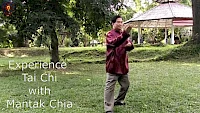 Tai Chi erleben mit Mantak Chia
03:37
-
 Morgenübungen mit Mantak Chia
31:04
-
 Mantak Chia UHT-Systemüberblick: 9 Formeln
06:15
-
 Walter Kellenberger – So werden Sie UHT-Qigong-Lehrer Level 1
02:19
Mantak Chia Einführung (Englisch)
Mantak Chia Einführung (Deutsch)
Tai Chi erleben mit Mantak Chia
Morgenübungen mit Mantak Chia
Mantak Chia UHT-Systemüberblick: 9 Formeln
Walter Kellenberger – So werden Sie UHT-Qigong-Lehrer Level 1
Verwandte Kurse
Empfohlene Bücher

Bone Marrow Nei Kung

Knochenmark Nei Kung
Tao Yin - Exercises for Vitalisation, Health and Longevity

Tao Yin - Übungen für Vitalisierung, Gesundheit und Langlebigkeit
Nei Kung del Midollo Osseo
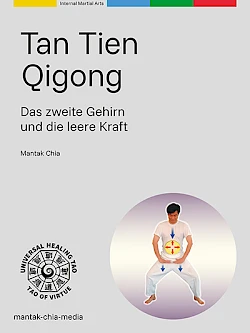
Tan Tien Qigong